
TL;DR: Colorado slip & fall mistakes can quietly kill an otherwise strong claim — even before you talk to an insurer. Under the Colorado Premises Liability Act (C.R.S. § 13-21-115) and the state's two-year filing deadline, missteps made in the hours, days, and weeks after a fall can permanently reduce or erase your right to compensation. Read on to learn which mistakes matter most and how to sidestep them — or talk to us now to get matched with a vetted Colorado slip & fall attorney.
Mistake #1: Not Reporting the Incident Right Away
If you slip and fall at a Colorado store, restaurant, apartment complex, or any other property, report the incident to the owner or manager before you leave. Ask for a written incident report and get a copy. Without a contemporaneous record, the property owner can later deny that the hazard existed at all — and their insurance company will use that gap against you.
- Tell the manager what happened and where it happened.
- Request a written report and get the report number or a copy.
- Never leave without documenting the name of the person you spoke with.
If you fell on public property — a city sidewalk, a government building, a park — the stakes are even higher. Under the Colorado Governmental Immunity Act (C.R.S. § 24-10-109), you must file a formal written notice of claim within 182 days of discovering your injury. Miss that window and your right to sue the government is almost certainly gone.
Mistake #2: Skipping the Scene Evidence
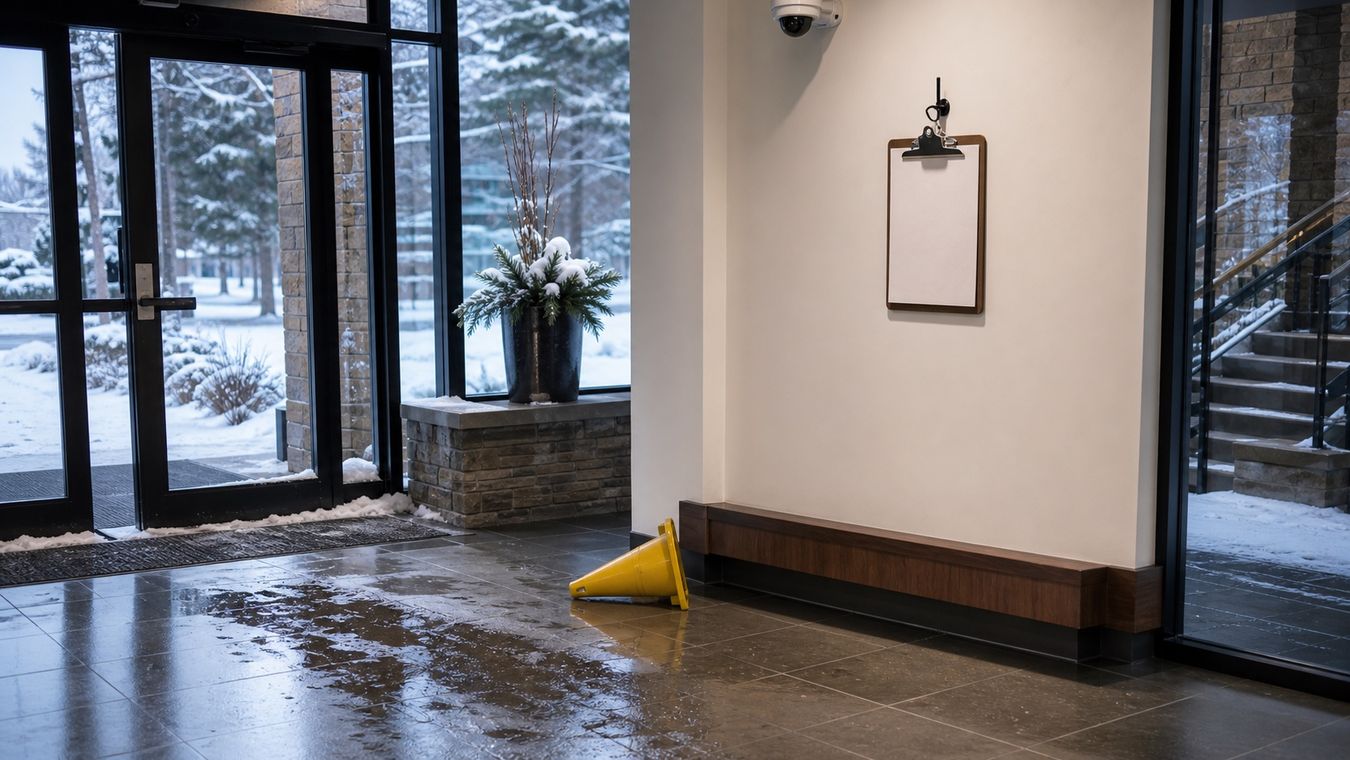
Evidence disappears fast. Surveillance footage at Colorado businesses is routinely overwritten within days. Wet-floor signs get moved. Broken pavement gets patched. Cleaning logs get filed away. The single best thing you can do in the moments after a fall is document everything.
- Photograph the hazard from multiple angles.
- Photograph your injuries — including bruising and swelling as it develops over the next 48 hours.
- Collect names and contact information for every witness.
- Note the time, lighting conditions, and any missing warning signs.
Colorado courts recognize "constructive notice" — meaning a property owner can be liable for a hazard they should have discovered through reasonable inspection, even if they claim they never saw it. Strong scene evidence is how you establish that the hazard had been there long enough for a responsible owner to have fixed it.
Mistake #3: Delaying or Skipping Medical Care
Colorado slip & fall mistakes rarely hurt a case more than a gap in medical treatment. If you wait weeks to see a doctor, the defense will argue that your injuries must not have been serious — or that something else caused them. See a physician as soon as possible after your fall, even if you feel only mild discomfort. Some injuries, like soft-tissue damage and concussions, worsen over hours or days.
- Get evaluated in the ER or by your primary care doctor the same day or next day.
- Follow every follow-up recommendation — skipping appointments suggests your injuries resolved.
- Keep all bills, prescription receipts, and treatment records in one place.
Medical records serve two purposes: they document your injuries for the claim, and they create a timeline that is very hard for an insurer to attack. Economic damages — medical expenses, lost wages, future care costs — are not capped under Colorado law, so thorough documentation of every cost matters.
Mistake #4: Accepting the First Settlement Offer
Property owners and their insurers move quickly after a slip and fall because a fast, low settlement closes your claim forever. Colorado's modified comparative negligence rule (C.R.S. § 13-21-111) means the insurer will look for any reason to assign you a share of fault. If they can push your fault percentage to 50% or more, you collect nothing.
Before you accept anything, consider what you may still be owed:
- All past and future medical expenses (uncapped).
- Lost wages and reduced earning capacity (uncapped).
- Pain, suffering, emotional distress, and reduced quality of life — subject to Colorado's non-economic damage cap, which for personal injury claims filed on or after January 1, 2025, is $1.5 million (C.R.S. § 13-21-102.5, as amended by House Bill 24-1472).
A quick settlement offer almost never reflects the full value of your claim. Get matched in under a minute with a Colorado slip & fall lawyer who can evaluate what your case is actually worth before you sign anything.
Mistake #5: Posting on Social Media
Defense attorneys and insurance adjusters routinely search the social media accounts of injury claimants. A single photo of you at a friend's birthday party, hiking, or even standing at a barbecue can be used to argue that your injuries are not as serious as you claim. Colorado comparative-fault rules mean any evidence that shifts blame to you directly reduces your recovery.
- Pause all social media posting about your activities after the fall.
- Set existing accounts to private — though this alone is not a complete shield.
- Never post photos, videos, or comments about your physical condition, your case, or the accident.
Mistake #6: Missing the Two-Year Deadline
Colorado Revised Statutes § 13-80-102 gives slip and fall victims two years from the date of injury to file a lawsuit. Colorado courts strictly enforce this deadline — even being one day late typically results in automatic dismissal of your case, regardless of how strong your evidence is. Insurance negotiations do not pause or extend this clock.
There are limited exceptions — for example, if the injured person is a minor, the clock generally does not start until they turn 18 — but you should never rely on an exception. If a government entity owns the property where you fell, remember the 182-day notice requirement is even shorter and is a separate deadline that runs alongside the two-year limit.
- Two years — standard filing deadline for a Colorado slip & fall (C.R.S. § 13-80-102).
- 182 days — notice-of-claim deadline when a government entity is involved (C.R.S. § 24-10-109).
- Insurance negotiations do not toll (pause) these clocks.
FAQ
Does Colorado's comparative negligence rule mean I can't recover if I was partly at fault?
Not necessarily. Colorado uses a "modified comparative negligence" rule under C.R.S. § 13-21-111. As long as your share of fault is less than 50%, you can still recover damages — but your award is reduced by your percentage of fault. If the jury finds you 25% at fault on a $100,000 case, you receive $75,000. Only if you are found 50% or more at fault do you recover nothing.
What does the Colorado Premises Liability Act (C.R.S. § 13-21-115) cover?
The Colorado Premises Liability Act is the primary law governing slip and fall claims in Colorado. It applies to any property owner or person legally responsible for a property's condition. Your ability to recover depends partly on your legal status as a visitor: invitees (such as store customers) receive the highest duty of care, licensees receive a moderate duty, and trespassers are generally owed only a duty not to be intentionally harmed.
What if I fell on a government-owned property, like a public sidewalk or state office?
Claims against government entities in Colorado are governed by the Colorado Governmental Immunity Act (C.R.S. § 24-10-109). You must file a formal written notice of claim within 182 days of discovering the injury. Missing this deadline almost certainly bars your entire claim — even if the two-year general statute of limitations has not yet expired. Consult an attorney immediately after a fall on public property.
Is there a cap on how much I can recover in a Colorado slip & fall case?
Economic damages — medical bills, lost wages, future care costs — are not capped. Non-economic damages like pain and suffering are capped under C.R.S. § 13-21-102.5. For personal injury claims filed on or after January 1, 2025, the cap is $1.5 million, following Colorado's House Bill 24-1472. Damages for physical impairment or disfigurement are separate and not counted toward the non-economic cap.
Do I need a lawyer for a Colorado slip & fall claim?
You are not legally required to hire one, but it is strongly advisable. The property owner's insurer will have adjusters and attorneys working to minimize your payout from day one. Colorado's comparative-fault rules mean any misstep — a social media post, a delayed doctor visit, an imprecise recorded statement — can reduce your recovery or eliminate it entirely. An experienced attorney knows how to build and protect your claim.
Ready to Protect Your Colorado Slip & Fall Claim?
Time is your most limited resource after a slip and fall in Colorado. Evidence disappears, deadlines approach, and insurers count on you not knowing your rights. DearLegal matches injury victims statewide with vetted Colorado premises liability attorneys — at no cost to you, in minutes. Start your case today and let a qualified attorney evaluate your claim before a deadline slips by.
DearLegal is not a law firm and does not provide legal advice. This article is for informational purposes only. Consult a licensed attorney in your state for advice on your specific situation.