TL;DR: If a defective product hurt you in Hawaii, the evidence you gather in the days right after the incident can make or break your case. Hawaii law lets you pursue claims under strict liability, negligence, or breach of warranty — but each theory requires specific proof. You generally have two years to file under HRS § 657-7, and the clock starts the moment you know (or should know) about the injury and its cause. Talk to us today to get matched with a vetted Hawaii product liability attorney.
How Hawaii Product Liability Law Works
Hawaii allows injured consumers to pursue product liability claims under three legal theories: strict liability, negligence, and breach of warranty. Understanding which theory fits your facts matters because each one shapes what evidence you must gather.
Strict liability is the most powerful tool for injured consumers. Under strict liability, if a product was in an unreasonably dangerous condition when sold and causes injury as a result, the manufacturer or others in the supply chain can be held accountable without you having to prove they were careless. Negligence claims, by contrast, require you to show the manufacturer took some unreasonable action or inaction that made the product unsafe. Breach of warranty claims arise when a seller expressly or implicitly promises a product will be safe and function properly when used as intended, but it fails.
Hawaii courts recognize three categories of product defects: design defects (a flaw built into every unit), manufacturing defects (a flaw that occurred during production), and failure-to-warn defects (inadequate instructions or safety warnings). The type of defect you allege directly controls what evidence your attorney will pursue.
The Two-Year Deadline — and the Discovery Rule
Hawaii Revised Statutes § 657-7 requires that actions for damage or injury to persons or property be filed within two years after the cause of action accrued. Miss this window and your claim is almost certainly lost forever.
The good news: Hawaii's discovery rule means the two-year clock does not always start on the date of the accident. It starts when you knew — or reasonably should have known — about the negligent act, the damage, and the causal connection between the two. This rule often applies in defective product cases where injuries are not immediately apparent, such as those involving toxic exposure or latent product failures.
Bottom line: Act quickly. Evidence deteriorates, witnesses forget details, and the product itself may be discarded. The sooner you consult an attorney, the better your evidence position will be.
The Most Important Piece of Evidence: The Product Itself
In most defective product cases, the physical product is the cornerstone of your claim. Experts need to examine it to determine whether a design flaw, a manufacturing deviation, or a missing warning caused your injury. Without the product, key elements such as the existence of a defect and causation become speculative — and defendants will argue you cannot meet your burden of proof.
Follow these steps immediately after an injury:
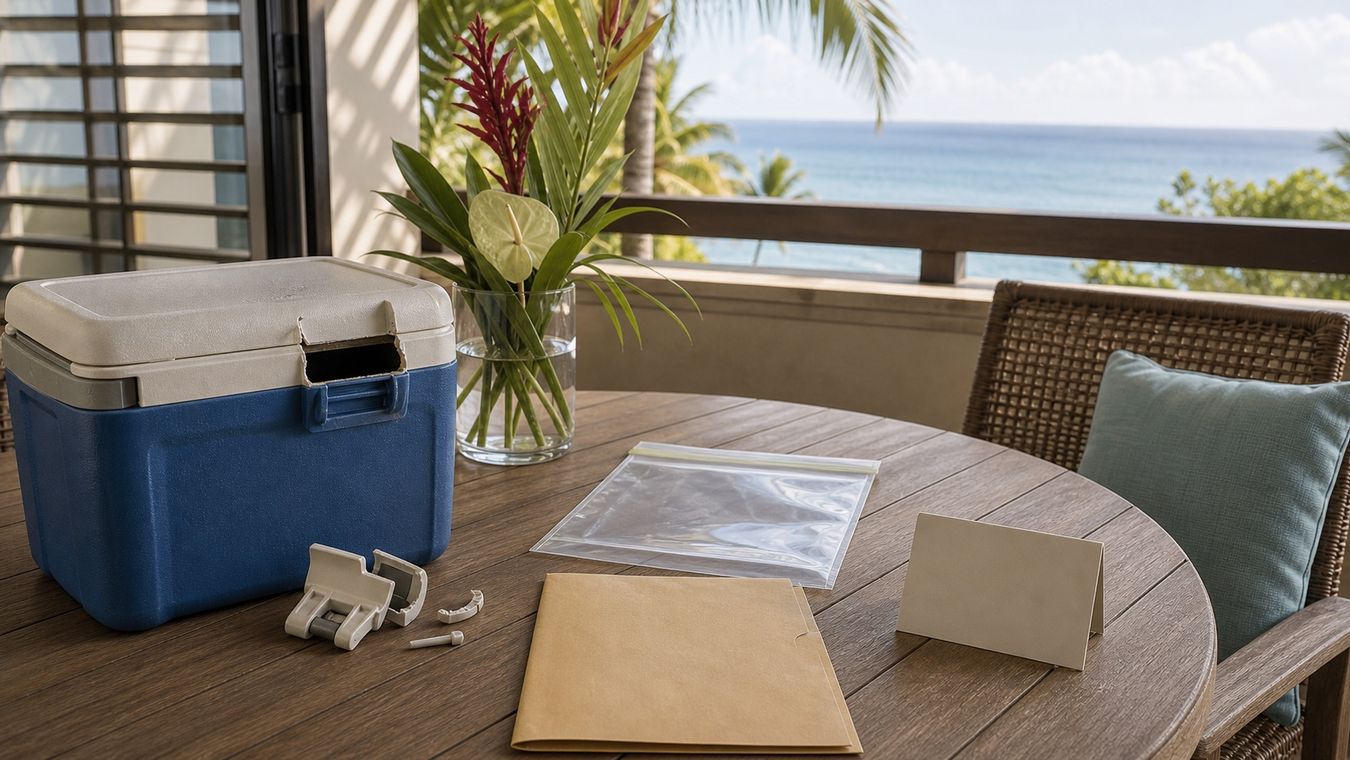
- Do not throw the product away. Store it exactly as it was after the incident, in its post-incident condition.
- Photograph everything. Take photos of the product, the defect, the injury, and the scene.
- Keep all packaging, manuals, and receipts. These support failure-to-warn claims and establish your ownership and purchase date.
- Seek prompt medical care. Medical records link your injuries to the product and document their severity.
- Preserve digital evidence. Save any emails, text messages, or online reviews about the product, and check whether a recall has been issued by the U.S. Consumer Product Safety Commission.
How Hawaii Courts Test Whether a Product Is Defective
Hawaii courts apply two different tests to determine whether a product is legally defective, and understanding them helps you frame your evidence strategy.
The consumer expectations test asks whether a product failed to perform as safely as an ordinary consumer would expect when used in its intended or reasonably foreseeable manner. If a blender blade shatters during normal blending, most consumers would not expect that — and you have a strong foundation for this test.
The risk-utility test shifts the burden to the defendant, who must show that the benefits of the design outweigh its inherent risk of danger. Evidence of safer alternative designs, industry standards, and internal company risk analyses all become relevant here.
Need help figuring out which test fits your situation? Get matched in under a minute with a Hawaii product liability attorney who can evaluate your claim.
Why Expert Witnesses Are Often Essential
Product liability cases are frequently won or lost on expert testimony. Under Hawaii Rules of Evidence Rule 702, a witness qualified as an expert by knowledge, skill, experience, training, or education may testify to help the jury understand technical issues that are beyond everyday knowledge.
Courts consider whether the expert's scientific technique or mode of analysis is trustworthy and valid — similar to the federal reliability standard. This means you need the right experts, not just any experts.
Typical experts in Hawaii defective product cases include:
- Mechanical or electrical engineers — to analyze design or manufacturing flaws
- Medical doctors — to establish causation between the defect and your specific injuries
- Human factors specialists — to assess whether warnings were adequate and understandable
- Industry safety experts — to testify about applicable safety standards the product failed to meet
Expert witnesses rely on physical evidence to form their opinions. Without the product to inspect, their testimony may be excluded as unreliable — another reason preserving the product from day one is so critical.
Comparative Fault: How Your Own Actions Affect Your Recovery
Hawaii's negligence rules around fault are somewhat unique. For strict liability claims, Hawaii courts apply a pure comparative negligence standard — meaning you can seek recovery even if you were substantially at fault for the accident. Your compensation is simply reduced by your percentage of fault.
For negligence-based claims, a modified comparative negligence standard applies: you can only recover if you were 50 percent or less at fault. If you were more than 50 percent responsible, you collect nothing.
Defendants routinely raise two main defenses: (1) that the product was modified after it left their control, causing the injury; or (2) that the user misused the product in an unforeseeable way. Collecting evidence that you used the product as directed — including saving the instruction manual and any safety warnings — directly counters these defenses.
One more note: Hawaii law recognizes that punitive damages may be available in a product liability action based on strict liability where a plaintiff proves the defendant engaged in aggravating conduct — for instance, a manufacturer that concealed a known defect. Establishing this requires additional evidence of what the company knew and when.
FAQ
What if I already threw away the defective product?
Losing the product is serious but not always fatal to your claim. Hawaii courts have noted that it is not always necessary to produce the specific instrumentality to prove a product liability case. Your attorney may be able to build the case with photographs, witness statements, medical records, and — if the same model caused other injuries — data from similar incidents or government recall databases. Act quickly and consult a lawyer before concluding your case is impossible.
Does the two-year deadline apply even if I didn't know the product caused my injury right away?
Not necessarily. Hawaii's discovery rule delays the start of the two-year clock under HRS § 657-7 until the moment you discovered — or reasonably should have discovered — the negligent act, the damage, and the causal connection between them. This is especially relevant for latent injuries from toxic products or failures that took time to manifest. However, relying on the discovery rule is legally complex and defendants will challenge it aggressively.
Who can I sue — just the manufacturer?
No. Hawaii product liability claims can target any party in the chain of commerce — manufacturers, distributors, component suppliers, and retailers. Identifying the right defendants requires tracing the product's path from design to the sale point. Your attorney will conduct discovery to map the supply chain and identify all potentially liable parties, which can significantly affect the total compensation available to you.
Can I still recover if I was partly at fault for the injury?
Yes, in many cases. Under strict liability, Hawaii applies pure comparative negligence, so even significant personal fault does not automatically bar your claim — it just reduces your award proportionally. Under a negligence theory, you can recover as long as you were no more than 50 percent at fault. Your attorney can advise which theory gives you the strongest path to recovery based on the specific facts.
What if the product was recalled after my injury?
A product recall can be powerful evidence that the manufacturer knew or should have known about the defect. Under Hawaii's rules of evidence, evidence of subsequent remedial measures can be admitted in product liability cases for the purpose of proving a dangerous defect existed. Save all recall notices, document when the recall was announced relative to your injury date, and notify your attorney immediately if you learn of a recall.
Ready to Build Your Hawaii Defective Product Case?
Evidence is perishable. The defective product may be repaired or destroyed. Witnesses move on. Medical records must be requested promptly. Every day you wait makes it harder to build the strongest possible case under Hawaii law. DearLegal matches injured consumers across Hawaii with vetted, experienced product liability attorneys — at no cost to you unless your attorney recovers compensation. Start your case now and find out what your claim may be worth.
DearLegal is not a law firm and does not provide legal advice. This article is for informational purposes only. Consult a licensed attorney in your state for advice on your specific situation.