TL;DR: In New Mexico, the prosecution must prove every element of a crime beyond a reasonable doubt — you never have to prove your innocence. The state's evidence rules (the New Mexico Rules of Evidence, NMRA) govern what prosecutors can actually use against you, and skilled defense lawyers can challenge, exclude, or undermine that evidence long before trial. If you've been charged, talk to us now to get matched with a vetted New Mexico criminal defense attorney.
The Burden of Proof: Why It's the Prosecution's Problem, Not Yours
The single most important concept in any New Mexico criminal case is who carries the burden of proof — and it is never you. The state, through the District Attorney, must prove guilt beyond a reasonable doubt. That standard is the highest in the American legal system, far above the "more likely than not" bar used in civil lawsuits.
What does "beyond a reasonable doubt" actually mean? It is not proof beyond all conceivable doubt, but it is close: a doubt must be real and based on reason and common sense after carefully weighing all the evidence. If even one juror holds a genuine reasonable doubt, the law requires acquittal.
New Mexico's Uniform Jury Instructions require every judge to tell the jury that the defendant is presumed innocent and that this presumption stays with the defendant throughout the entire trial — unless and until the prosecution overcomes it with solid proof. Your defense attorney does not have to present a single witness or piece of evidence if the prosecution's case is weak enough.
What Counts as Evidence in a New Mexico Criminal Case?
New Mexico courts operate under the New Mexico Rules of Evidence (NMRA), a framework closely modeled on the Federal Rules of Evidence but shaped by New Mexico's own case law and constitutional traditions. Evidence generally falls into four categories:
- Physical evidence: weapons, drugs, DNA, fingerprints, digital devices
- Testimonial evidence: statements from eyewitnesses, police officers, or expert witnesses under oath
- Documentary evidence: records, photographs, surveillance footage, text messages, financial statements
- Demonstrative evidence: diagrams, maps, or reconstructions used to illustrate testimony
Under Rule 11-402 NMRA, only relevant evidence is admissible — meaning it must tend to make a fact of consequence more or less probable. Even relevant evidence can be excluded under Rule 11-403 NMRA if its potential to unfairly prejudice you substantially outweighs its probative value. Your attorney can object to improperly admitted evidence at any stage.
How the State Gathers Evidence — and Where It Can Go Wrong
Law enforcement typically builds its case through police reports, witness interviews, crime scene analysis, and forensic testing. But each step creates opportunities for constitutional violations that a good defense lawyer can exploit.
Search and Seizure Violations
New Mexico's Constitution, Article II, Section 10, provides robust protection against unreasonable searches and seizures — and the New Mexico Supreme Court has held that the exclusionary rule is a constitutional right, not merely a judicial remedy. That means evidence collected in violation of your rights must be suppressed. A defense attorney can file a motion to suppress under Rule 5-212 NMRA to keep that evidence out of court.
Interrogation and Confession Issues
Any statement you made to police may be challenged if officers failed to properly advise you of your Miranda rights or used coercive tactics. Suppressed confessions can gut the prosecution's case entirely.
Chain of Custody Problems
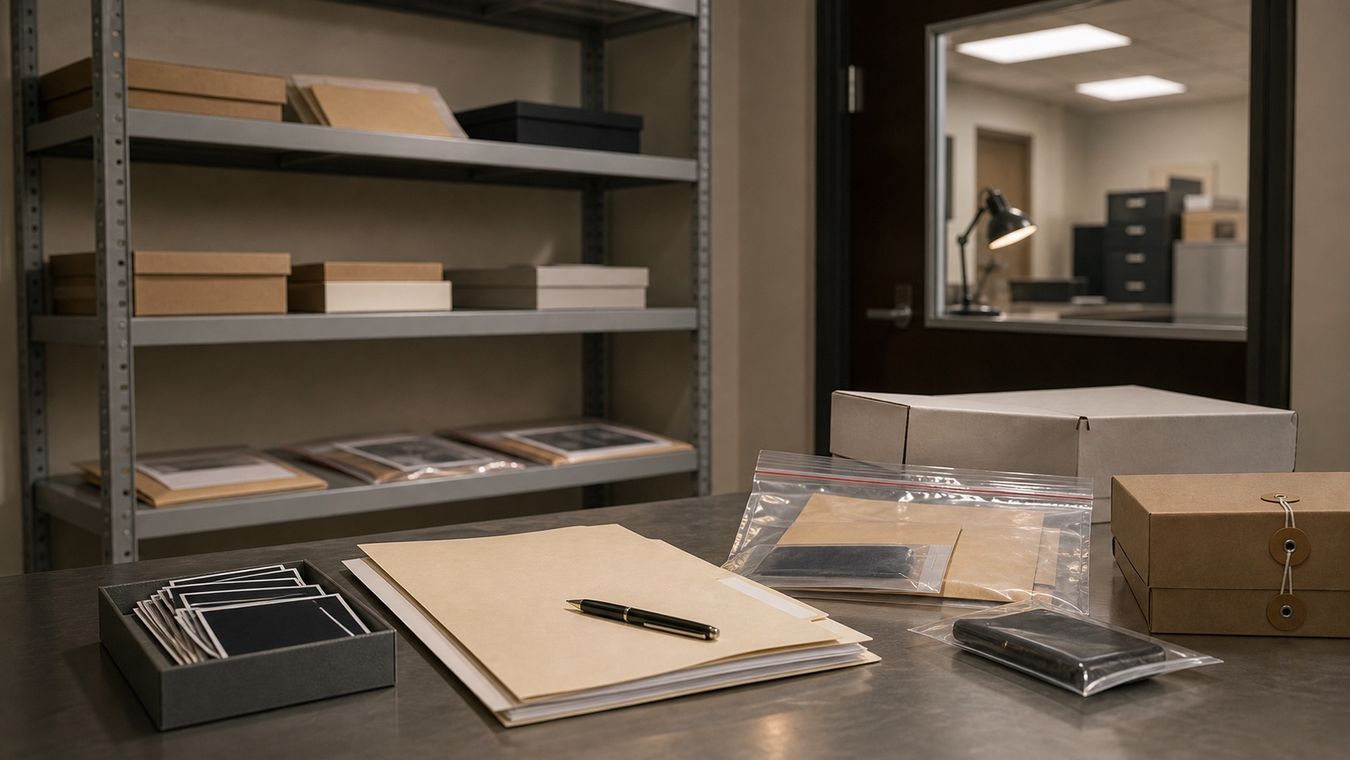
Physical evidence — especially drugs or biological samples — must be carefully tracked from collection to the courtroom. Breaks in the chain of custody can make evidence inadmissible or at least raise serious doubt about its integrity.
Your Right to See the State's Evidence: Discovery and Brady
New Mexico imposes strong pre-trial disclosure obligations on prosecutors. Rule 5-501(A) NMRA requires the state to disclose — within ten days of arraignment — all documents material to the defense, scientific test results, witness statements, and any evidence favorable to the defendant that due process requires the state to produce.
On top of that, the federal Brady v. Maryland doctrine requires prosecutors to turn over all exculpatory evidence — any information that tends to prove your innocence or undermine the credibility of a government witness. Withholding such material is a Brady violation and can result in dismissal of charges or a new trial.
Discovery is one of the most powerful tools in criminal defense. If you want to understand what evidence the state has against you, get matched in under a minute with a New Mexico criminal defense attorney who can demand full disclosure.
Common Defense Strategies for Attacking the State's Evidence
Knowing what the state must prove — and how it gathered its proof — reveals the pressure points your attorney can target. Common approaches include:
- Motion to suppress: Ask the court to throw out evidence obtained through an unconstitutional search, seizure, or interrogation.
- Challenge witness credibility: Cross-examine officers, eyewitnesses, or informants about bias, inconsistencies, or prior misconduct.
- Attack forensic evidence: Hire independent experts to challenge the prosecution's DNA, drug, or ballistics analysis.
- Raise affirmative defenses: Self-defense, alibi, lack of intent, or mistaken identity can shift the jury's assessment of the evidence.
- Demand Brady material: Force the state to produce all exculpatory evidence, including police misconduct records that could impeach officers testifying against you.
Each of these strategies is most effective when deployed early. Waiting until the week of trial to challenge evidence is almost always too late.
Misdemeanor vs. Felony: Does the Evidence Standard Change?
The beyond-a-reasonable-doubt standard applies to both misdemeanors and felonies in New Mexico. The difference is in the stakes and the proceedings. Most misdemeanor cases are heard in a single day before a judge or a six-person jury. Felony trials are typically heard by a twelve-person jury, and all twelve must vote guilty for a conviction — a unanimous verdict is required.
Felony sentences in New Mexico can also be enhanced if the prosecution proves aggravating circumstances beyond a reasonable doubt, under N.M.S.A. § 31-18-15.1. That means the burden-of-proof standard protects you at sentencing, too — not just at trial.
FAQ
Do I have to prove I'm innocent in New Mexico?
No. The presumption of innocence means the state must prove you guilty — you are not required to prove anything. Your attorney can choose to present no evidence at all if the prosecution's case is too weak to meet the reasonable-doubt standard.
Can evidence be thrown out before trial?
Yes. Through a pre-trial motion to suppress under Rule 5-212 NMRA, your attorney can ask the court to exclude evidence obtained in violation of your constitutional rights. If the court agrees, that evidence cannot be used against you at trial — and sometimes the entire case falls apart without it.
What is a Brady violation and why does it matter?
A Brady violation occurs when prosecutors withhold evidence that is favorable and material to your defense. In New Mexico, this duty is reinforced by Rule 5-501 NMRA, which sets a ten-day post-arraignment deadline for state disclosures. A proven Brady violation can result in dismissed charges, a new trial, or other serious sanctions against the prosecution.
What if witnesses against me are lying or unreliable?
Credibility is fair game at trial. Your attorney can cross-examine any witness about inconsistencies, bias, prior criminal history, or deals made with prosecutors. Under Rule 11-609 NMRA, prior criminal convictions can also be used to impeach a witness's truthfulness, subject to certain limits.
How soon should I hire a criminal defense attorney?
As soon as possible — ideally before you speak to police again. Critical evidence deadlines, discovery obligations, and suppression motion windows open immediately after charges are filed. The earlier an attorney reviews the evidence, the more options you have.
Ready to Fight the State's Evidence? Start Here.
Understanding the evidence rules is the first step. The second step is having an attorney who knows how to use them. DearLegal matches people facing criminal charges across New Mexico with vetted, experienced defense attorneys — at no cost to you for the match. Whether you're dealing with a misdemeanor or a serious felony, the right lawyer can challenge the state's proof, protect your rights, and fight for the best possible outcome. Find a New Mexico criminal defense lawyer today and start building your defense.
DearLegal is not a law firm and does not provide legal advice. This article is for informational purposes only. Consult a licensed attorney in your state for advice on your specific situation.