
TL;DR: If a defective product hurt you in New Hampshire, the strength of your case depends almost entirely on the evidence you preserve — and how quickly you start collecting it. New Hampshire product liability law is governed by RSA Chapter 507-D, and you generally have three years from the date you discover your injury to file a claim. The right evidence can mean the difference between a full recovery and walking away empty-handed. Talk to us and get matched with a vetted New Hampshire product liability attorney in under a minute.
How New Hampshire Product Liability Law Works
New Hampshire's product liability framework is built on RSA Chapter 507-D, titled "Product Liability Actions." Under this statute, the law covers any lawsuit for injury, death, property damage, or other harm arising from the design, manufacture, assembly, or construction of a product. Importantly, the law is broad: it encompasses every legal theory you might rely on — strict liability, negligence, breach of warranty, failure to warn, misrepresentation, and more. That flexibility is good news for injured consumers, but it also means the evidence you need can vary depending on which legal theory fits your situation best.
Under New Hampshire law, products are generally considered defective in three ways:
- Manufacturing defect: Something went wrong when the specific product was made, causing it to deviate from its intended design.
- Design defect: The entire product line is unreasonably dangerous because of how it was designed. New Hampshire courts apply a risk-benefit balancing test to decide whether a design crosses that line.
- Failure to warn: Even a well-made product can be defective if the manufacturer or seller failed to provide adequate warnings or instructions about foreseeable dangers.
The Three-Year Deadline — and Why Evidence Preservation Starts Day One
Time is your first enemy in a defective product case. Under RSA 507-D:2, all product liability claims in New Hampshire must be filed within three years of when the injury is discovered — or when it reasonably should have been discovered. This is called the "discovery rule," and it means the clock does not necessarily start ticking on the day of the accident. If your injury was latent — for example, a slow-developing illness caused by a toxic product — the three-year window may begin later.
Why does this matter for evidence? Because the same deterioration that affects your legal deadline also affects your proof. Physical products break down. Witnesses' memories fade. Digital records get deleted. Surveillance footage is overwritten in days. The moment you suspect a product caused your injury, treat every piece of related information as potentially critical evidence.
One more deadline to note: RSA 507-D:2 also contains a statute of repose provision, limiting claims to no later than 12 years after the manufacturer parted with possession or sold the product — whichever occurred last. Note, however, that New Hampshire courts have previously addressed the enforceability of that repose provision, so its practical effect depends on the specific facts of your case. An attorney can clarify how it applies to you.
The Core Evidence You Need in a New Hampshire Defective Product Case
Building a winning case requires evidence across several categories. Here is what New Hampshire product liability attorneys typically gather and why each item matters.
1. The Product Itself
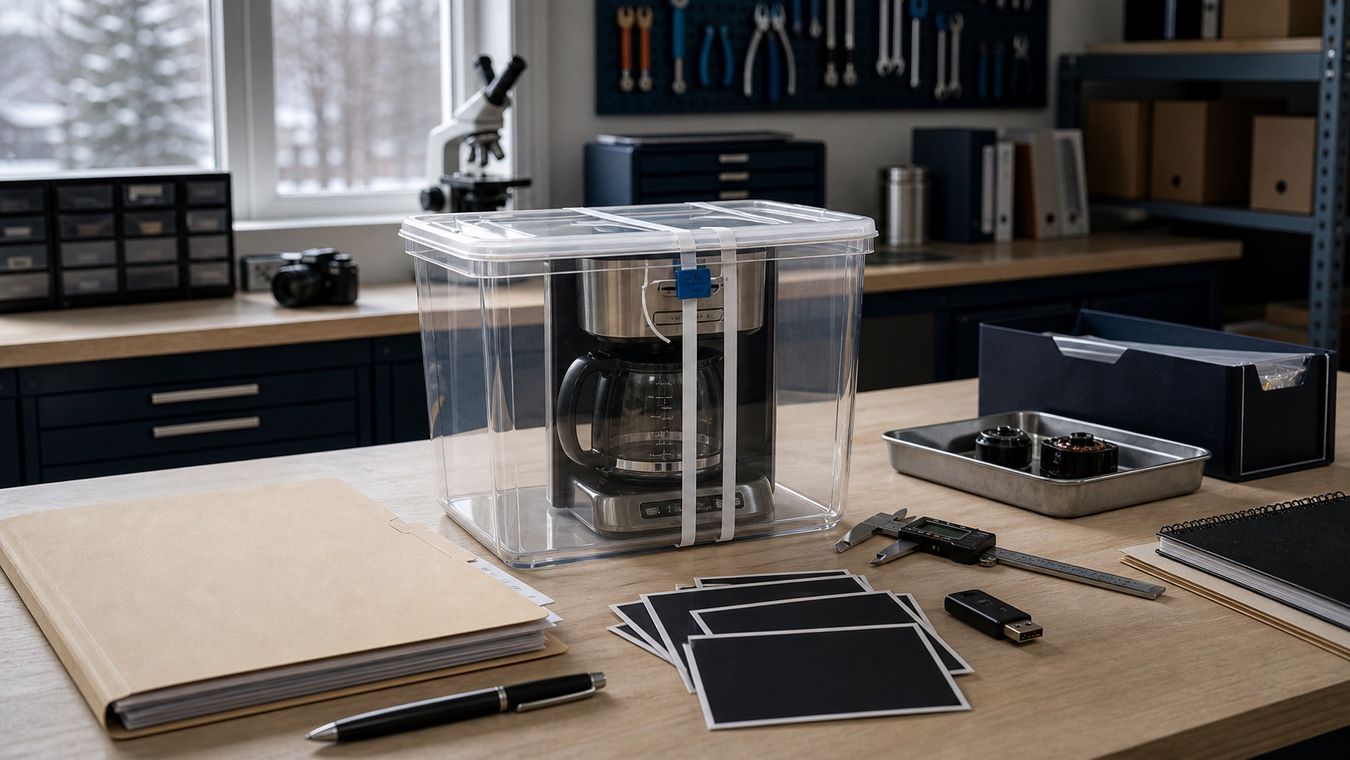
Never throw away, repair, or return the product that injured you. The physical item is often the single most important piece of evidence in your case. Attorneys and expert witnesses need to examine it to determine whether a manufacturing defect is visible, whether a design feature created an unreasonable risk, or whether warning labels were inadequate or missing. Preserve it exactly as it was at the time of the incident — do not clean it, fix it, or alter it in any way.
2. Proof of Purchase and Product Records
Gather every document that ties you to the product: receipts, order confirmations, warranty cards, packaging, and instruction manuals. These records confirm you were the consumer, establish when and where you bought the item, and lock in the model number and batch information that can later be cross-referenced against recall databases and manufacturing records.
3. Medical Records and Bills
Your medical documentation links the defect to your injury — what lawyers call causation. Seek medical care promptly and be specific with your doctor about exactly how you were hurt and what product was involved. Collect emergency room notes, diagnoses, treatment plans, prescriptions, imaging results, and all invoices. Gaps in medical treatment can be used by the defense to argue your injuries were minor or unrelated to the product.
4. Photographs and Video
Take photos and video of the product, your injuries, the scene of the incident, and any visible defects as soon as possible after the incident. If the defect is something that can be seen — a cracked component, a missing safety guard, a melted wire — visual documentation is powerful and immediate evidence that does not require expert interpretation.
5. Incident Documentation
Write down everything you remember about exactly how the incident happened while it is fresh. Note the date, time, location, how you were using the product, and what went wrong. If there were witnesses — family members, coworkers, bystanders — get their contact information right away. Witness testimony about what they saw or heard can corroborate your account of events and undercut defense claims that you misused the product.
6. Complaints, Recalls, and Safety Reports
Search the U.S. Consumer Product Safety Commission (CPSC) database and the National Highway Traffic Safety Administration (NHTSA) database for recalls or safety complaints involving your product. If other consumers have reported the same problem, that pattern of complaints is powerful evidence that the manufacturer knew — or should have known — about the defect. Your attorney can also issue discovery requests to the company to obtain internal testing data, engineering reports, and complaint logs.
The Critical Role of Expert Witnesses
Most New Hampshire defective product cases require at least one expert witness — an engineer, a medical professional, a toxicologist, or another specialist who can explain to a jury why the product was defective and how it caused your specific injuries. Expert witnesses play a crucial role in New Hampshire civil litigation, particularly in complex cases involving engineering, medical questions, and product liability.
New Hampshire follows the Daubert standard for determining whether expert testimony is admissible, formally adopted in State v. Dahood, 148 N.H. 723 (2002), and codified in New Hampshire Rule of Evidence 702. Under that rule, an expert may testify only if the testimony is based on sufficient facts or data, is the product of reliable principles and methods, and the expert has reliably applied those methods to the facts of the case. In plain terms: junk science does not get in front of the jury. Your attorney must retain a qualified expert whose methodology can withstand scrutiny from the defense.
Expert disclosures in New Hampshire civil cases are governed by RSA 516:29-b. Disclosures must generally be made at least 90 days before trial and must include a written report signed by the expert. Missing that deadline can result in your expert being excluded — which can be fatal to your case. Ready to find an attorney who knows how to build this kind of case? Get matched in under a minute at DearLegal.
How New Hampshire's Comparative Fault Rule Affects Your Evidence Strategy
New Hampshire uses a modified comparative fault system under RSA 507:7-d. Under this rule, your damages are reduced in proportion to your share of fault — but you can still recover as long as your fault is not greater than the combined fault of the defendants. In practice, this means that if you are found 50% at fault or less, you can still recover a proportionally reduced award. If you are found 51% or more at fault, you recover nothing.
Why does this matter for evidence? Because the defense will almost always try to argue that you misused the product, ignored warnings, or modified it in some way that caused your injury. Under RSA 507-D:3, if the product was modified or altered after it left the manufacturer's control and that modification caused the injury, your claim can be seriously weakened. Your evidence must affirmatively show that you used the product as intended — or in a way that was reasonably foreseeable — and that it failed anyway.
Keep any original packaging and instructions that show how the product was supposed to be used. Save text messages, emails, or purchase records that reflect how you used it. If you followed the manufacturer's instructions and were still hurt, that is a powerful fact in your favor.
Common Evidence Mistakes That Can Hurt Your Case
Even well-meaning injured consumers make evidence mistakes. Here are the most common ones to avoid:
- Returning or discarding the product. Once it is gone, it is gone. Retailers and manufacturers have no obligation to preserve it for you.
- Waiting too long to see a doctor. Delayed treatment creates gaps the defense will exploit to argue your injury came from somewhere else.
- Posting about the incident on social media. Defense attorneys routinely review plaintiffs' social media for inconsistencies that contradict injury claims.
- Giving a recorded statement to the manufacturer's insurer without legal advice. These statements can be used against you later and are rarely in your best interest.
- Missing the three-year filing deadline. Once it passes, even the strongest evidence in the world cannot save your claim.
FAQ
What is the most important piece of evidence in a New Hampshire defective product case?
The product itself is typically the most critical piece of evidence. Attorneys and expert witnesses need to physically inspect it to determine whether a manufacturing flaw, design danger, or warning failure caused your injury. Never discard, repair, or return the product after an incident — preserve it exactly as it was and contact an attorney promptly.
Do I need an expert witness to win a defective product case in New Hampshire?
In most New Hampshire product liability cases, yes. Juries are rarely equipped to assess on their own whether a product's design was unreasonably dangerous or whether a manufacturing defect caused a specific injury. New Hampshire courts apply the Daubert standard under Rule of Evidence 702 to gatekeep expert testimony, so your attorney must retain a qualified expert whose methods and opinions can survive a legal challenge from the defense.
How long do I have to file a defective product claim in New Hampshire?
Under RSA 507-D:2, you generally have three years from the date you discovered — or reasonably should have discovered — that a product caused your injury. This discovery rule is especially important for latent injuries that take time to manifest. Do not wait until the deadline is close to consult an attorney; gathering and preserving evidence takes time, and experts must be retained and disclosed well in advance of trial.
Can I still recover if I was partly at fault for my injury?
Yes, in most cases. New Hampshire follows a modified comparative fault rule under RSA 507:7-d. As long as your share of fault is 50% or less, you can still recover damages — though your award will be reduced by your percentage of fault. For example, if you are found 20% at fault on a $100,000 claim, you recover $80,000. You only lose the right to recover entirely if a jury finds you were more than 50% responsible.
What if the product was recalled — does that automatically mean I win?
Not automatically, but a recall is powerful supporting evidence. A recall shows that the manufacturer or a regulatory agency identified a safety problem serious enough to require action. It does not, however, prove on its own that the defect caused your specific injury, that you suffered damages as a result, or that you used the product correctly. You still need medical records, expert testimony, and other evidence to connect the recall to your harm.
Ready to Find a New Hampshire Product Liability Attorney?
Winning a defective product case in New Hampshire is not just about what happened to you — it is about proving it with the right evidence, presented the right way, before the three-year deadline under RSA 507-D:2 expires. From preserving the product itself to retaining a qualified expert who can survive a Daubert challenge, every step matters.
At DearLegal, we match injured consumers statewide — from Manchester to Concord, Portsmouth to Keene — with vetted product liability attorneys who handle these complex cases every day. You pay nothing to get matched, and most product liability lawyers work on a contingency basis, meaning you owe no attorney fees unless you recover. Do not let evidence disappear or the clock run out on your claim. Start your case today — it only takes a minute.
DearLegal is not a law firm and does not provide legal advice. This article is for informational purposes only. Consult a licensed attorney in your state for advice on your specific situation.